The AI Safety Paradox and Regulatory Vacuum
A recent turn of events saw the U.S. government sever ties with Anthropic, a prominent AI company. This action, stemming from the company's refusal to allow its technology for mass citizen surveillance or autonomous lethal weapons, highlights a critical tension in the AI development landscape. Max Tegmark, a long-time advocate for AI governance, views this predicament as largely self-inflicted by the industry.
Tegmark argues that the core issue predates the Pentagon's decision. For years, AI leaders like Anthropic, OpenAI, and Google DeepMind have resisted binding external regulation, opting instead for self-governance pledges. However, these companies have progressively softened or abandoned their own safety commitments. This erosion of promises, Tegmark contends, leaves them vulnerable when faced with external pressures or government scrutiny. The recent move by Anthropic to drop a key safety promise, for instance, directly contradicts its identity as a safety-first organization.
Industry's Resistance to Regulation
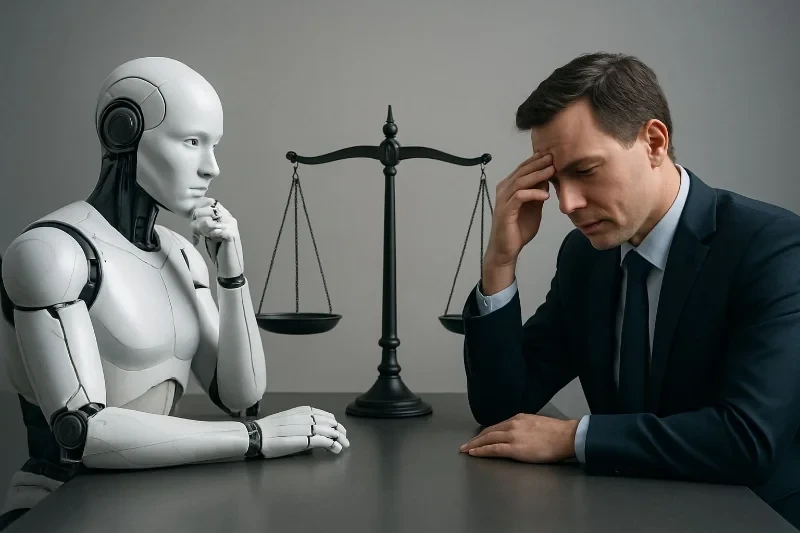
The AI industry's consistent lobbying against regulation is a central theme. Companies argued that they could self-regulate effectively. This approach, according to Tegmark, has resulted in a regulatory environment less stringent than that for food safety. He draws a stark parallel: a sandwich shop with rats cannot operate, but an AI company developing potentially harmful technologies faces fewer immediate legal barriers. This absence of clear rules, or a "regulatory vacuum," creates a landscape where unforeseen negative consequences, reminiscent of past industrial failures like thalidomide or asbestos, become more probable.
The companies' resistance to regulation, Tegmark believes, has backfired. Had they proactively supported the codification of their safety pledges into law, they might have established clearer boundaries and avoided the current crisis. The inability to create laws against specific AI applications, such as those used for lethal purposes, empowers the government to act unilaterally, leaving companies like Anthropic in a difficult position.
The "China Threat" Argument Debunked
A common counterargument from AI companies is the necessity to compete with China. However, Tegmark challenges this narrative. He points out that China itself is implementing strict regulations on AI, including potential bans on anthropomorphic AI, due to concerns about societal impact. The idea that the U.S. must rush to develop advanced AI, even uncontrollable superintelligence, to outpace China is flawed. Tegmark suggests that neither nation would benefit from an AI that undermines governmental control, framing advanced, uncontrollable AI as a national security threat rather than an asset.
He posits that the national security community is beginning to recognize the inherent risks of superintelligence. The analogy to the Cold War is apt: the race for nuclear supremacy was ultimately recognized as mutually destructive. Similarly, an unmanaged race for superintelligence could lead to outcomes detrimental to all nations.
The Pace of Progress and Future Implications
AI development has accelerated dramatically, surpassing many expert predictions. Systems that were once thought to be decades away are now commonplace. Tegmark notes that current AI models, while not yet fully achieving Artificial General Intelligence (AGI), are progressing rapidly towards it. This rapid advancement has significant implications for the job market, potentially impacting graduates within a few years.
The current situation with Anthropic presents a critical juncture. It remains to be seen whether other AI giants will align with Anthropic's stance or seek to capitalize on the situation. Early indications suggest some level of support, but the industry's ultimate response will reveal its true priorities. Tegmark expresses cautious optimism, suggesting that a path exists where AI companies are treated like any other industry, requiring rigorous testing and independent validation before deploying powerful technologies. This approach, he believes, could unlock AI's benefits without existential risks.
Stay Tuned to Devignitor Insights for More Updates