Honda's Uncertain EV Future
Navigating the current automotive landscape is challenging for legacy manufacturers, especially with shifting incentives and mounting competition. However, Honda's recent decisions appear to escalate these challenges considerably. The company has effectively dismantled its limited and seemingly unpromising electric vehicle (EV) programs, signaling a significant retreat from the burgeoning EV market. This move casts doubt on Honda's ability to compete in the ongoing industry transformation.
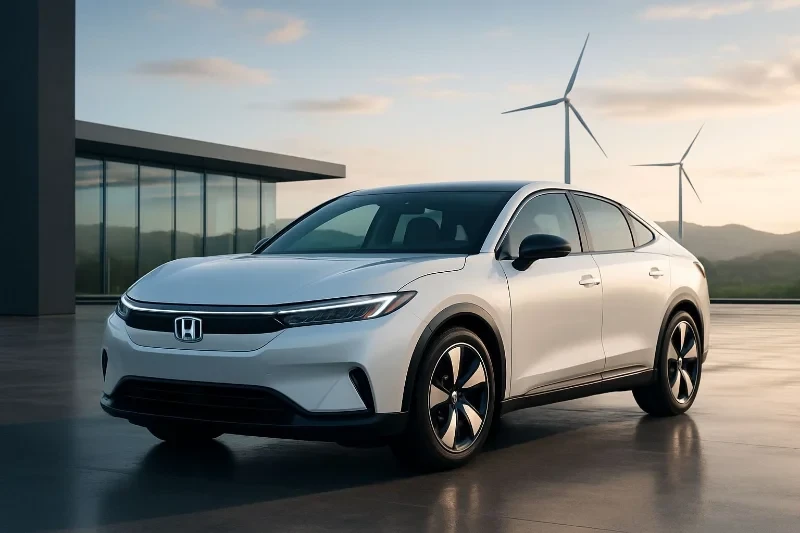
While Honda points to external factors like U.S. tariffs and Chinese competition, the underlying issue appears to be a lack of a robust EV strategy from the outset. The company announced the halt of development for the electric Acura RDX, the Honda 0 sedan, and SUV – models intended to be its first bespoke EVs. Furthermore, Honda will cease production of the Prologue, a vehicle largely developed and built by General Motors. These decisions could have far-reaching negative consequences, primarily by widening the gap in two critical areas of automotive evolution: electric powertrains and software-defined vehicles (SDVs).
Missed Opportunities in Electrification
For Honda, and many other established automakers, the transition to EVs seems to be viewed as merely a powertrain swap. The thinking might be to wait for the EV technology to mature and then simply replace internal combustion engines with electric motors and batteries. This approach, however, is fundamentally flawed. Many manufacturers have discovered that retrofitting existing platforms designed for gasoline engines into EVs leads to heavier, less efficient, and more expensive vehicles.
Developing EVs from the ground up, however, presents an opportunity for automakers to reimagine the automobile, potentially making it more cost-effective. For instance, Ford's Mustang Mach-E, while a sales success, has faced financial hurdles partly due to its platform being derived from the gasoline-powered Escape. Ford CEO Jim Farley has noted that legacy engineering decisions, such as a heavier wiring harness compared to competitors like Tesla, have impacted the vehicle's efficiency and cost.
By pausing its EV development, Honda forfeits crucial learning experiences. This includes gaining practical knowledge in EV development and manufacturing processes, establishing new supplier relationships and supply chains, and crucially, gathering direct customer feedback on what consumers truly value in electric vehicles.
The Software-Defined Vehicle Gap
Honda's decision also jeopardizes its position in the shift towards software-defined vehicles (SDVs). These vehicles are characterized by core functionalities that can be continuously upgraded and improved through software. Consumers, particularly those opting for EVs from brands like Tesla, Rivian, and BYD, have come to expect seamless over-the-air updates, intuitive infotainment systems, and advanced driver-assistance features. Honda has yet to demonstrate significant progress in these areas.
While SDVs are not exclusively electric, the two concepts often go hand-in-hand. The larger battery capacity in EVs provides ample power for sophisticated computing systems and facilitates functions like over-the-air updates even when the vehicle is parked. Although theoretically possible to create a gasoline-powered SDV, the easier and more immediately profitable path of internal combustion engines likely discourages Honda from pursuing this avenue, mirroring its stance on EVs.
Honda's Identity Crisis
At its heart, Honda is an internal combustion engine company, renowned for producing excellent engines. However, the diminishing importance of this expertise in the automotive industry presents an identity crisis. Historically, Honda has also prided itself on creating engaging driver's cars known for their light weight, efficiency, and handling. The rise of autonomous driving technology raises questions about the relevance of the "driver's car" concept.
Beyond autonomy, the market for purely driver-focused cars may be limited. Honda's core appeal has often been reliability and affordability, with handling being a secondary, albeit appreciated, attribute. As EVs promise greater reliability and Chinese automakers demonstrate decreasing costs with battery technology advancements, Honda risks losing its competitive edge if it cannot match rivals in reliability and price. This challenge is already evident in China, where Honda acknowledged its inability to offer competitive value compared to newer EV manufacturers, contributing to significant losses. Without a clear EV strategy, Honda faces the increasing likelihood of similar setbacks globally.
Stay Tuned to Devignitor Insights for More Updates