The AI Power Dilemma and an Oceanic Solution
The insatiable demand for computing power to fuel Artificial Intelligence has led to a significant energy crunch. So severe is this demand that discussions, extending beyond the realm of visionary entrepreneurs like Elon Musk, have turned to the extraordinary idea of launching servers into space to harness constant solar power. However, one innovative startup is looking not upwards, but downwards, to the ocean for a solution.
Aikido's Submerged Data Center Plans
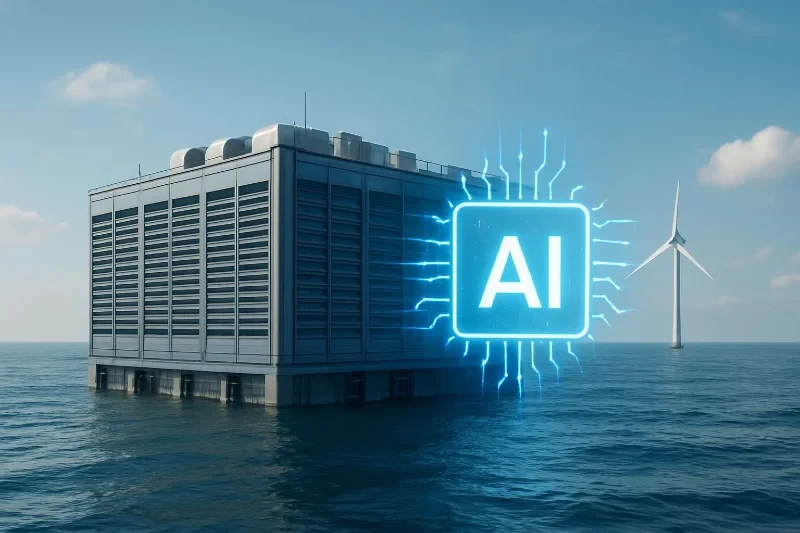
Offshore wind developer Aikido is charting a course to deploy a 100-kilowatt demonstration data center submerged off the coast of Norway later this year. This initial unit will be housed within the specialized pods of a floating offshore wind turbine. Building on this pilot, the company envisions a much larger deployment off the UK coast by 2028. This scaled-up version would feature a 15 to 18 megawatt turbine powering a 10 to 12 megawatt data center.
Addressing Key Challenges
The move offshore offers compelling solutions to several pressing issues:
- Proximity to Power: The data center will be situated directly above its power source, eliminating transmission losses and complexities.
- Consistent Energy: Offshore wind resources are typically more consistent than their onshore counterparts, and a modest battery system can easily bridge any temporary lulls in wind speed.
- Reduced Public Opposition: Submerged data centers circumvent the common NIMBY (Not In My Backyard) sentiments often associated with onshore facilities, which are typically concerned about noise pollution and environmental impact.
- Efficient Cooling: Harnessing the naturally cold seawater provides a far simpler and more efficient cooling solution compared to the intricate systems required for data centers in the vacuum of space.
Navigating the Challenges of the Deep
While the ocean presents solutions, it also introduces its own set of formidable challenges:
- Harsh Marine Environment: Despite being submerged, the constant motion of the ocean necessitates robust engineering to ensure all equipment is securely fastened.
- Corrosion: Seawater's corrosive nature demands that all components, including the housing, power infrastructure, and data connections, be specifically hardened and protected against salt and moisture.
Lessons from the Past
Aikido is not the first to explore the potential of submerged data centers. Over a decade ago, Microsoft initiated a similar concept. Their experimental project, launched off the coast of Scotland in 2018, yielded promising results. During a 25-month trial, fewer than six out of more than 850 servers failed, a success attributed partly to the data hall being filled with inert nitrogen gas. Microsoft subsequently open-sourced its accumulated patents in 2021, though the company eventually concluded the project by 2024.
Stay Tuned to Devignitor Insights for More Updates