The Return of a Tech Icon and a Blast from the Past
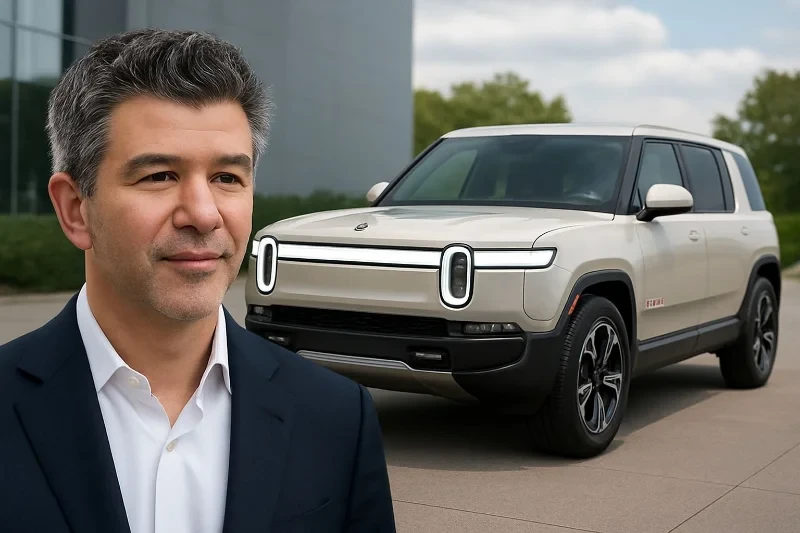
It seems the tech world is experiencing a strange sense of déjà vu. Travis Kalanick, the co-founder and former CEO of Uber, who stepped down in 2017 amidst controversy, is making a significant comeback. Kalanick has announced the formation of a new robotics company named Atoms. More strikingly, he is reportedly on the verge of acquiring Pronto, an autonomous vehicle startup focused on industrial and mining applications. Pronto was founded by Anthony Levandowski, a former Uber colleague. Kalanick has even declared himself Pronto's "largest investor." This confluence of events brings to mind 2016, a year characterized by immense hype surrounding autonomous vehicles, and the controversial Uber acquisition of Levandowski's previous startup, Otto, which led to a lawsuit from Waymo.
Rivian's Ambitious R2 Launch and SXSW Presence
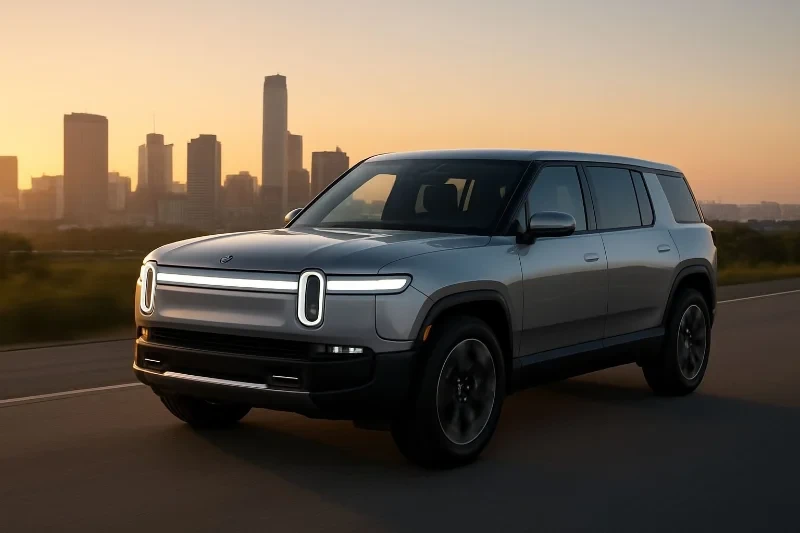
Shifting focus to current developments, Rivian, the electric vehicle maker, recently made waves at SXSW in Austin. The company used the prominent tech, music, and film festival as a platform to unveil pricing and specifications for its upcoming R2 SUV. The initial launch edition of the R2 is set to start at $57,990, with a more anticipated $45,000 version slated for a late 2027 release. Rivian's strategy appears to heavily lean into experiential marketing, targeting the SXSW demographic, which closely aligns with the archetype of a potential Rivian customer. The R2 is positioned as a more accessible offering compared to Rivian's larger and more expensive R1 truck and SUV. Notably, the R2 boasts a new operating system that is more powerful and capable than its predecessor. This system utilizes a single system-on-chip (SoC) capable of 200 TOPS of edge computing for infotainment and other functions, a departure from the next-gen R1 vehicles which use four SoCs and rely more on cloud computing. According to Wassym Bensaid, Rivian's head of software, this edge computing capability is crucial for locally running large language models, promising lower latency and enhanced performance.
Another significant innovation highlighted are the "halo wheels" on the steering wheel. These provide haptic feedback and allow drivers to adjust climate control, fan speed, and audio volume without diverting their attention to the central touchscreen. Chief designer Jeff Hammoud indicated that this feature addresses key customer requests by integrating functionality without adding excessive physical buttons, with future software updates poised to expand their capabilities.
Lucid Motors' Robotaxi Concept and Mind Robotics' Funding
Lucid Motors showcased a robotaxi concept at its investor day, designed to be built on the company's midsize EV platform. While initially presented as a dedicated robotaxi, the company later clarified that it is a concept and not actively under development. Reports suggest the project is in its very early stages, raising questions about its potential timeline for market entry.
In related news, Rivian has spun out another startup, Mind Robotics, an industrial robotics lab. The company recently secured $500 million in Series A funding, co-led by Accel and Andreessen Horowitz. This follows a $115 million seed round led by Eclipse. Mind Robotics is now valued at approximately $2 billion. Rivian CEO RJ Scaringe, interviewed at SXSW, shared his perspective on industrial robotics, emphasizing the importance of focusing on the functionality of robotic hands rather than overly complex human-like biomechanics, which he believes adds unnecessary complexity for most industrial tasks.
Other Notable Deals and Industry Moves
This week also saw several other significant transactions and developments:
- Global ride-hailing company inDrive acquired Pakistan-based quick-commerce startup Krave Mart in an all-stock deal.
- Mirai Robotics, an Italian company developing autonomous maritime systems, raised $4.2 million.
- Surf Air placed an order for 25 Beta Technologies all-electric ALIA aircraft, with options for up to 75 more.
- Group14 has begun producing silicon battery materials at its new factory in South Korea, with an annual capacity sufficient for 10 gigawatt-hours of energy storage.
- Hayden AI is suing its co-founder and former CEO for alleged misconduct and misuse of funds.
- The Federal Aviation Administration has approved eight pilot programs for widespread electric aircraft testing starting this summer across 26 states.
- Harbinger, an EV startup, revealed its second vehicle, a smaller, medium-duty work truck.
- Lucid Motors is rolling out Apple CarPlay and Android Auto support for Gravity SUV owners.
- The National Transportation Safety Board indicated that drivers in fatal crashes involving Ford's BlueCruise system were likely distracted prior to impact.
- Nuro is testing its autonomous vehicle technology in Japan.
- Slate Auto has appointed a new CEO, Peter Faricy, ahead of its production launch.
- Tesla is now officially licensed as a utility in the United Kingdom.
- Wayve is collaborating with Uber and Nissan to launch a robotaxi service in Tokyo.
- Uber has added Motional to its robotaxi network, with its self-driving Hyundai Ioniq 5 vehicles now appearing on the Uber app in Las Vegas.
- Zoox is mapping streets in Dallas and Phoenix, with plans to test its autonomous vehicles in these cities and partner with Uber for robotaxi services in Las Vegas later this year. Zoox is pursuing exemptions from Federal Motor Vehicle Safety Standards for its custom robotaxis.
The Return of the Chevrolet Bolt EV
In a surprising turn of events, the Chevrolet Bolt EV is making a comeback. This move has been likened to the automotive equivalent of the McRib sandwich, a nostalgic yet compelling offering. The economics behind GM's decision to revive the Bolt are also under examination.
Stay Tuned to Devignitor Insights for More Updates