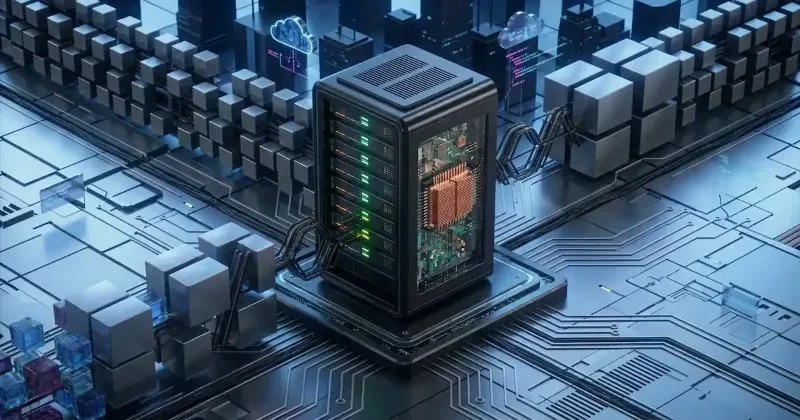
From Satellites to Silicon: A New Era in Data Connectivity
Three former SpaceX engineers, instrumental in maintaining constant contact between thousands of Starlink satellites, have launched Mesh Optical Technologies. This Los Angeles based startup recently secured $50 million in Series A funding, led by Thrive Capital. The team, comprising CEO Travis Brashears, President Cameron Ramos, and VP of Product Serena Grown-Haeberli, is poised to revolutionize the production of optical transceivers.
The Crucial Role of Optical Transceivers
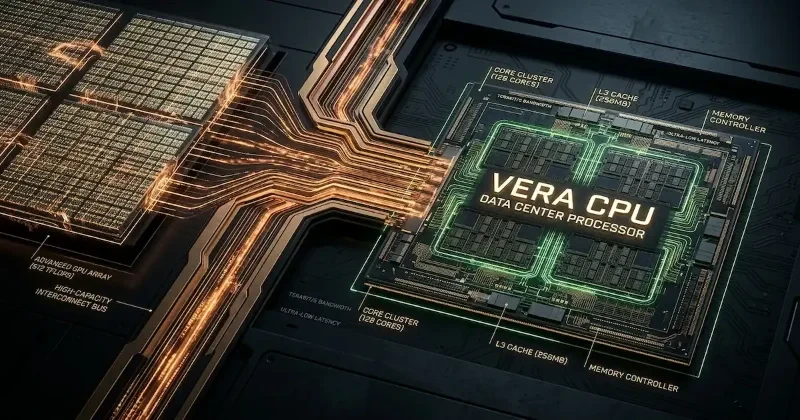
Optical transceivers are vital components that convert optical signals from fiber optic cables or lasers into electrical signals that computers can process. Their importance is amplified in data centers dedicated to training and operating large-scale deep learning models, as they enable multiple Graphics Processing Units (GPUs) to work collaboratively. "Someone will brag about a million GPU cluster, you have to multiply by four to five for the number of transceivers in that cluster," explained Brashears, highlighting the sheer volume required.
Addressing Market Limitations and National Security Concerns
The inspiration for Mesh Optical Technologies arose when the co-founders, during their work at SpaceX, assessed the existing optical transceiver market for next-generation satellites. They identified significant limitations. The current market is heavily dominated by Chinese firms. Mesh aims to establish its supply chain outside of China, preempting potential national security concerns and trade restrictions. As Philip Clark of Thrive Capital noted, "If AI is the most important technology in several generations, to have critical parts of AI data center capex run through misaligned or competitive countries is a problem." Mesh is addressing the immediate need for improved interconnectivity to scale AI development.
Automated Manufacturing and Future Ambitions
Mesh's ambitious goal is to achieve a production rate of a thousand units per day within the year, positioning them for significant bulk orders in 2027 and 2028. A key challenge lies in implementing automated, lights-out manufacturing techniques, which are less common in U.S. industry and heavily concentrated in China. By integrating design and production, Mesh intends to deliver more efficient and cost-effective components. Their current design eliminates a power-hungry component, potentially reducing GPU cluster power consumption by 3% to 5%, a significant saving for hyperscalers focused on efficiency.
Beyond data centers, Mesh envisions optical wavelength communications as the future paradigm for communication. "We want to be at the precipice of transition from RF to photonics, we want to interconnect everything, and not just computers, but that is where we are starting," stated Brashears. This signifies a broader aspiration to shift the world's communication infrastructure from radio frequencies to photonics.
Stay Tuned to Devignitor Insights for More Updates