Ring's Search Party Feature Sparks Privacy Debate
When Ring founder and CEO Jamie Siminoff launched the company's first Super Bowl commercial to showcase Search Party, an AI-powered feature designed to help find lost dogs using Ring camera footage, he anticipated a positive reception. Instead, the advertisement ignited a significant controversy.
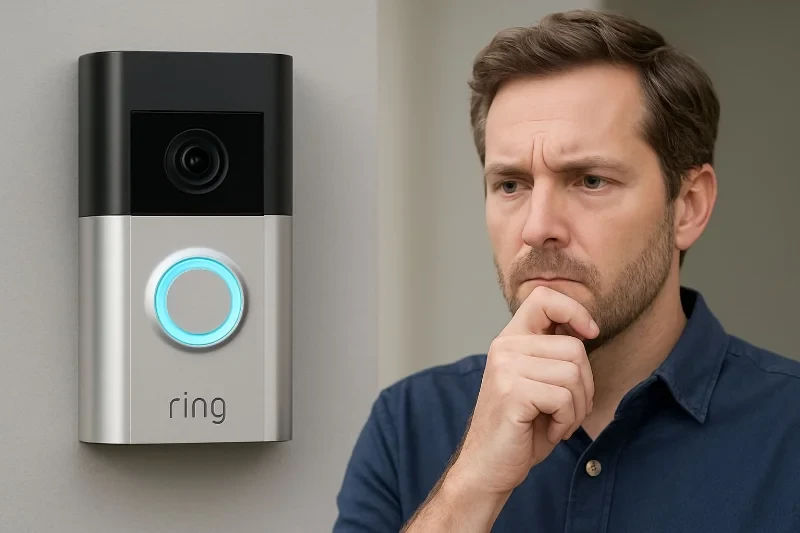
Since the commercial aired, Siminoff has been actively engaged in media appearances, including on CNN, NBC, and in The New York Times, aiming to clarify that critics misunderstand Ring's vision. In a recent conversation, he reiterated his position. While candid and eager to reshape the narrative, some of his explanations may leave privacy-conscious individuals with lingering concerns about the increasing prevalence of home surveillance.
Understanding the Search Party Feature
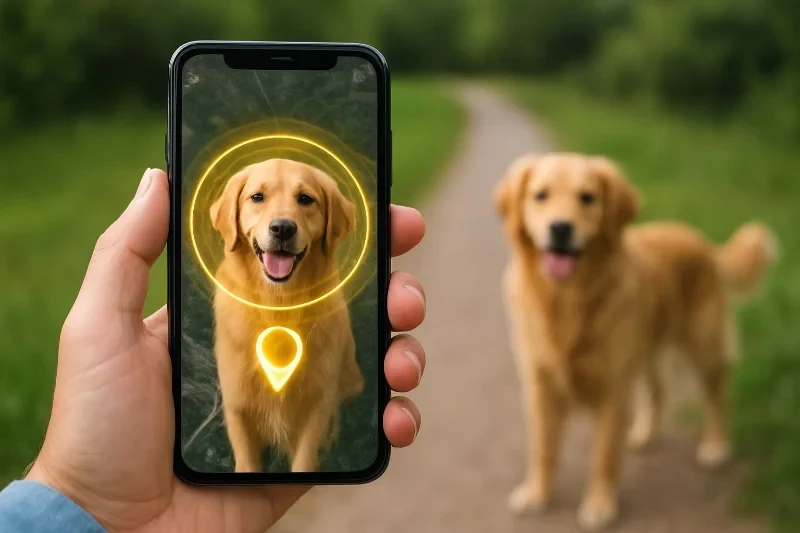
At its core, Search Party is a seemingly simple feature. If a dog goes missing, nearby Ring camera owners are alerted and asked if the animal appears in their footage. Users can choose to respond or completely ignore the request, remaining invisible to all parties involved. Siminoff emphasized this opt-out nature, stating that no one is compelled to participate.
"It is no different than finding a dog in your backyard, looking at the collar and deciding whether or not to call the number," he explained.
Siminoff believes the backlash stemmed from the visual representation in the Super Bowl ad, which depicted pulsing blue circles radiating from houses as cameras activated across a neighborhood grid. "I would change that," he admitted. "It wasn't our job to try to poke anyone to try and get some response."
The Shadow of Real-World Events
Ring's attempt to address these concerns arrived at a particularly sensitive time. The recent disappearance of Nancy Guthrie, mother of Today Show anchor Savannah Guthrie, brought home surveillance cameras into the national spotlight. Footage from a Google Nest camera at her property, showing an attempt to obscure the lens, circulated widely, intensifying discussions about safety, privacy, and surveillance.
Siminoff leveraged the Guthrie case to advocate for more cameras. In a separate interview, he argued that additional footage might have aided in solving the case, noting that Ring's network had captured footage of a suspicious vehicle near the property. Whether this perspective offers reassurance or raises alarm depends on individual viewpoints, but it highlights a fundamental difference in how Ring perceives its role in public safety.
Broader Concerns About Ring's Ecosystem
The unease surrounding Search Party extends beyond its visual presentation. It exists within a broader context that includes other Ring features like Fire Watch, which crowd-sources neighborhood fire mapping, and Community Requests. The latter allows law enforcement agencies to solicit relevant footage from Ring users during investigations.
Ring recently relaunched Community Requests in partnership with Axon, a company known for police body cameras and evidence management platforms. This collaboration followed a previous partnership with Flock Safety, an AI-powered license plate reader company. Ring ended its arrangement with Flock Safety shortly after the Super Bowl ad, citing potential workload issues. Siminoff declined to comment on whether Flock's reported data-sharing practices with U.S. Customs and Border Protection influenced this decision, though the timing was noteworthy given public concerns about Flock's data handling.
Navigating Data Privacy and AI Features
Siminoff acknowledges the heightened scrutiny on Ring's data practices, especially in light of recent reports detailing federal surveillance of citizens. He highlighted end-to-end encryption as Ring's primary privacy safeguard, explaining that when enabled, even Ring employees cannot access footage without a user's passphrase. He positioned this as an industry first for residential camera companies.
The implementation of facial recognition, however, presents a more complex picture. Ring's Familiar Faces feature, introduced before the Super Bowl ad, allows users to identify up to 50 frequent visitors, providing more specific alerts like "Mom at Front Door." Siminoff compared this to TSA facial recognition, suggesting public acceptance of such technology.
When questioned about consent from individuals captured by cameras without explicit permission, Siminoff stated that Ring complies with applicable laws. He also clarified that Amazon does not currently access Ring's facial recognition data, though he left open the possibility of future opt-in features involving this data.
The Trade-offs of End-to-End Encryption
Crucially, end-to-end encryption is an opt-in feature that requires manual activation. Ring's own documentation reveals a significant trade-off: enabling this feature disables a host of other functionalities, including AI video search, AI video descriptions, and the Familiar Faces feature itself. This creates a dichotomy where users must choose between comprehensive AI capabilities and robust privacy from Ring's own access.
Regarding concerns about footage reaching federal immigration agencies, Siminoff affirmed that Community Requests are exclusively channeled through local law enforcement. He also pointed to Ring's transparency reports concerning government subpoenas, though he did not elaborate on potential scenarios where these boundaries might become less defined.
Ring's Expanding Vision
Siminoff's ambitions for Ring extend beyond doorbell cameras. With over 100 million cameras already deployed, the company is exploring enterprise security solutions with new camera lines and security trailers. Small businesses have already begun incorporating Ring products, regardless of direct marketing efforts.
The company is also open to developing outdoor drones and has not ruled out future involvement in license plate detection technology, a core focus for Flock Safety. While Siminoff stated Ring is "definitely not" working on it currently, he acknowledged that "it's very hard to say we're never going to do something in the future."
Siminoff consistently frames Ring's development through his belief that homeowners should control their privacy and decide whether to participate in community-level initiatives. However, in an era of increasing government surveillance and high-profile privacy debates, the core question remains: can Ring's expanding network, AI capabilities, and facial recognition technology maintain its intended benign nature, irrespective of evolving partnerships and data flows? Stay Tuned to Devignitor Insights for More Updates