Waymo Responds to Senate Scrutiny Over Remote Assistance
Welcome to a special edition of mobility news, where we delve into the latest developments shaping the future of transportation. To stay informed, subscribe to our newsletter for regular updates.
Earlier this month, Waymo's Chief Safety Officer, Mauricio Peña, appeared before the Senate Commerce Committee to discuss autonomous vehicle technology. While much of the hearing focused on educating the public, a particular exchange between Senator Ed Markey and Peña regarding overseas remote assistance workers captured significant attention.
Peña disclosed that Waymo utilizes remote guidance workers located in the Philippines to assist with vehicle navigation and emergency situations. This revelation drew sharp criticism from Senator Markey, who questioned the company's reliance on individuals without U.S. driver's licenses to support its autonomous vehicles operating on American roads, among other concerns.
In response, Waymo published a blog post authored by Ryan McNamara, Head of Global Operations, and also shared a letter addressed to Senator Markey's office. These communications provide further details on Waymo's remote assistance (RA) operations.
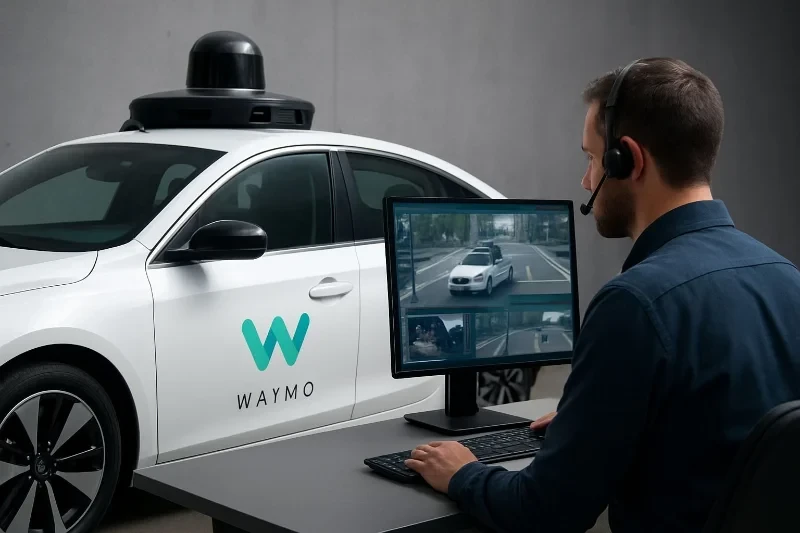
Waymo emphasizes that its remote workers do not remotely drive the robotaxis; the self-driving systems maintain full control. Instead, RA personnel provide information when specifically requested by the Waymo system. The company also maintains U.S.-based Event Response Teams (ERTs) composed of certified professionals who handle more complex situations, such as responding to collisions, liaising with law enforcement and riders, gathering data for regulatory reporting, and coordinating towing services.
Currently, approximately 70 Remote Assistance agents are on duty globally at any given time. These agents are stationed in Arizona, Michigan, and two cities in the Philippines. This geographical distribution has, as noted, faced criticism from some lawmakers.
To put this into perspective, Waymo operates a fleet of 3,000 vehicles, covering over 4 million miles weekly and providing more than 400,000 rides. This means a relatively small number of remote workers oversee a substantial number of robotaxis.
There has long been a call for autonomous vehicle companies to be more transparent about their behind-the-scenes operations, particularly concerning remote guidance. Many companies have shied away from this topic, perhaps aiming to project an image of more advanced, 'magical' technology. However, this lack of transparency often breeds distrust.
New Markets and Regulatory Hurdles
While the debate around remote guidance continues, Waymo is actively expanding into new markets. However, this expansion has faced setbacks. New York Governor Kathy Hochul recently withdrew a proposal that would have legalized robotaxis statewide outside of New York City. A spokesperson for the governor stated that stakeholder conversations indicated a lack of sufficient support for the proposal.
Industry News and Layoffs
In other industry news, reports indicate that Lucid is undergoing significant layoffs, cutting approximately 12% of its workforce. While the exact number of affected employees is not yet confirmed, it is estimated to be in the hundreds. Employees were reportedly informed early Friday morning, with some losing access to company systems. Affected staff are placed on a 60-day administrative leave before their official separation in late April.
Funding Rounds:
- Amari AI, an AI-powered platform for customs brokers, secured $4.5 million in funding co-led by First Round Capital and Pear VC.
- Kavak, a Mexico-based online used car dealer, raised $300 million in an equity round, with Andreessen Horowitz investing $200 million.
- LanzaJet, focused on next-generation fuels technology, closed the first tranche of its $135 million equity round at $47 million.
- Metafuels, a Swiss sustainable aviation fuel startup, raised $24 million in a Series A round led by UVC Partners.
Notable Developments
- Ford is strategizing to overcome recent financial setbacks by focusing on a tech-forward approach to EV production, aiming for a $30,000 EV truck without compromising profit margins.
- Redwood Materials is experiencing rapid growth in its energy storage business, Redwood Energy, which primarily serves AI data centers.
- Rivian is launching a companion app for Apple Watch, allowing owners to perform basic vehicle functions remotely.
- Tesla lost an appeal against a $243 million verdict in a fatal Autopilot crash case. However, the company received a reprieve from the California DMV, which will not suspend its sales and manufacturing licenses after Tesla ceased using the term "Autopilot" in its state marketing.
Stay Tuned to Devignitor Insights for More Updates