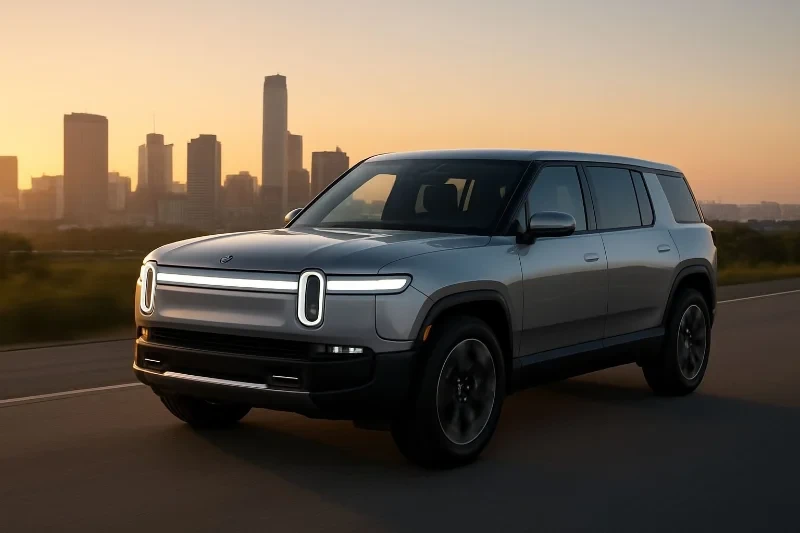
Rivian's Financial Performance and the Promise of R2
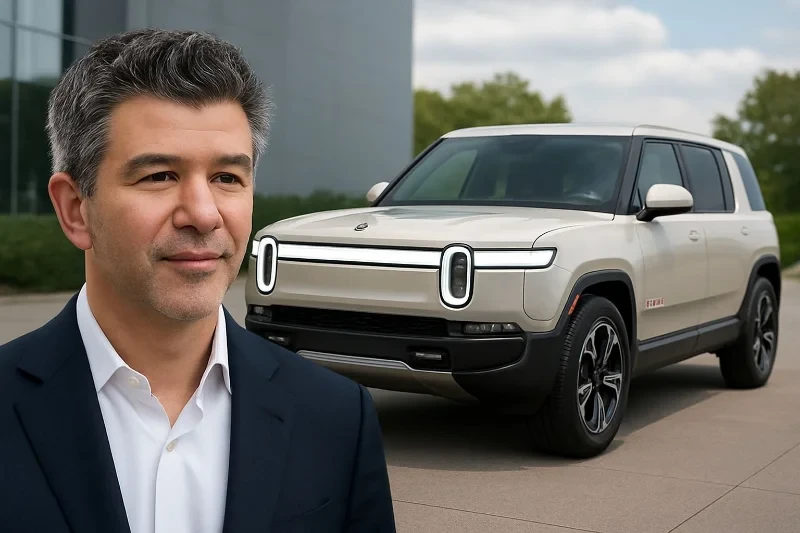
Earnings season provides a valuable, unfiltered look at the financial health and strategic direction of companies, cutting through the usual marketing narratives. Rivian's recent fourth-quarter and full-year 2025 earnings report was no exception, offering critical insights into the company's trajectory. The key takeaway is that Rivian's software endeavors, particularly its technology joint venture with Volkswagen Group, served as a crucial lifeline throughout 2025 and are poised to provide continued support into 2026, with an anticipated $2 billion from the VW Group. This financial backing is especially timely as Rivian prepares to launch its most significant product to date, the more affordably priced R2 SUV.
The earnings report also detailed progress in Rivian's efforts to reduce the cost of goods sold per unit. While the cost per vehicle for its current lineup remains high, it is steadily declining. This means Rivian is narrowing its losses on each vehicle it sells. For 2025, the automotive cost of goods sold per unit delivered stood at $100,900, a decrease from $110,400 in 2024.
The R2 SUV: Rivian's Next Big Test
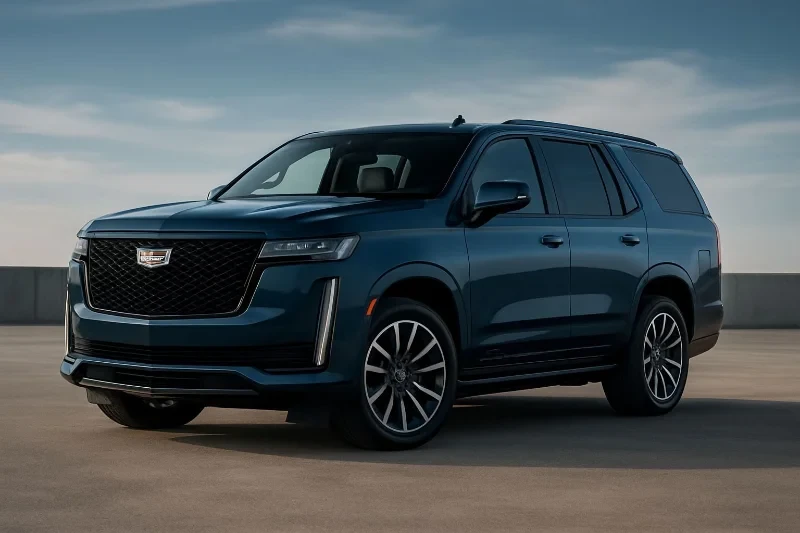
The upcoming R2 SUV represents Rivian's next major challenge. Designed to be considerably less expensive to produce and to purchase than its flagship R1T truck and R1S SUV, the R2's market reception and production efficiency will be closely watched. Initial insights into its performance are expected later this year.
Production for the R2 is slated to begin in the first half of 2026, with industry whispers suggesting a June start. Rivian's guidance for 2026 indicates confidence in both market demand and its ability to scale production. The company projects deliveries between 62,000 and 67,000 vehicles for 2026, a potential increase of up to 59% from the previous year. In 2025, Rivian delivered a total of 42,247 vehicles, encompassing its R1 consumer models and electric delivery vans (EDVs).
The market responded positively to this guidance, with Rivian's stock surging by 27% following the earnings announcement.
Autonomous Vehicle Strategies: Uber vs. Lyft
A noticeable divergence has emerged in the autonomous vehicle (AV) strategies of Uber and Lyft over the past 18 months. Uber has pursued an aggressive partnership approach, aligning with numerous AV developers. Lyft, in contrast, appears to be lagging in this area. This observation is shared by industry insiders who have expressed surprise at Lyft's perceived lack of aggressive action, especially given its substantial cash reserves of approximately $1.8 billion. Concerns have been raised regarding Lyft's decision to initiate a $1 billion share repurchase program, representing about 15% of its market capitalization, rather than investing more heavily in the AV value chain, as Uber has done.
Furthermore, reports indicate a series of departures of key executives from Lyft over the past year. These include individuals who held significant roles in financial planning, investor relations, and safety departments, some of whom have moved to competitor companies or other industry players.
Industry Consolidation and Sensor Technology Advancements
The mobility sector has witnessed significant consolidation, particularly among lidar companies, a trend that intensified following the boom years between 2015 and 2019. While many prominent companies from that era have ceased operations, smaller players have managed to survive and grow. Ouster, for example, has evolved from a small exhibitor at CES to a larger entity, bolstered by its 2022 merger with Velodyne and the 2021 acquisition of Sense Photonics.
Most recently, Ouster acquired Stereolabs, a developer of vision-based perception systems for robotics and industrial applications, for a combination of cash and stock. This acquisition is indicative of a broader trend towards consolidation among suppliers of perception sensors. The heightened interest and investment in sensor technologies, particularly cameras, can be attributed to the recent surge in focus on "physical AI."
Notable Funding Rounds and Developments
- Ever, an EV-only marketplace, secured $31 million in Series A funding, led by Eclipse, with participation from Ibex Investors, Lifeline Ventures, and JIMCO.
- Natilus, a startup developing blended-wing aircraft, raised $28 million in Series A funding, led by Draper Associates, alongside other investors including Type One Ventures, The Veteran Fund, Flexport, New Vista Capital, Soma Capital, Liquid 2 VC, VU Venture Partners, and Wave FX.
Key Industry Updates and Tidbits
- Aurora reported that its self-driving trucks can now complete a 1,000-mile route between Fort Worth and Phoenix without stopping, surpassing the legal driving limits for human drivers.
- The U.S. Securities and Exchange Commission concluded its investigation into Fisker last year.
- Lyft has introduced teen accounts in over 200 U.S. cities, enabling minors aged 13 and older to book rides without an adult.
- New videos offer a detailed look at Rivian's revised manual rear door release mechanism for the R2 SUV, a critical safety feature that addresses industry-wide concerns regarding concealed electronic door handles, particularly highlighted by Tesla.
- The Trump administration's repeal of the EPA's 2009 "endangerment finding" could potentially impact tailpipe emissions regulations for vehicles, though it faces a lengthy and likely contentious legal process.
- Uber is expanding its AV partnerships, with plans to launch robotaxis in Dubai in collaboration with China's Baidu. Additionally, Uber and China's WeRide are significantly expanding their partnership to deploy at least 1,200 robotaxis across the Middle East by 2027, having already launched robotaxi services in downtown Abu Dhabi.
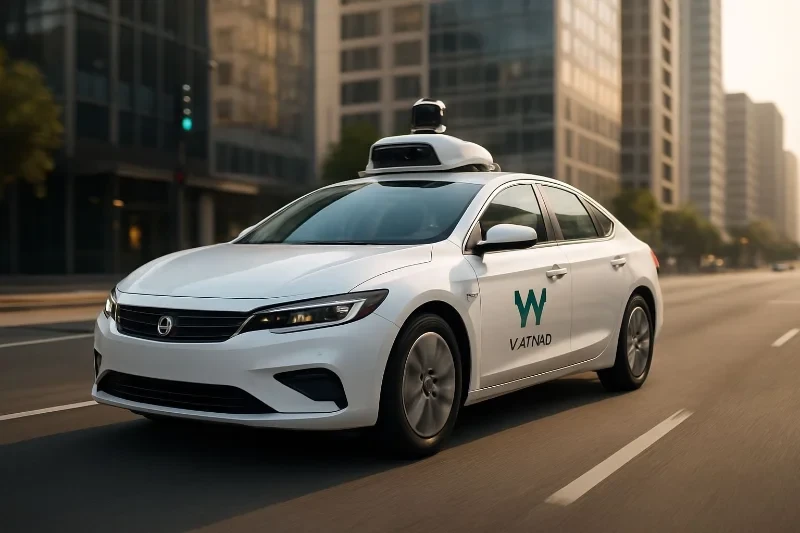
- Waymo has removed safety drivers from its test vehicles in Nashville as it prepares for a robotaxi service launch. The company is also piloting a program in Atlanta where gig workers are paid to ensure Waymo robotaxi doors are properly closed, aiming to improve fleet efficiency.
- Waymo is rolling out its sixth-generation "Waymo Driver" integrated into the Zeekr RT (Ojai) vehicle, with future integration planned for the Hyundai Ioniq 5. Fully autonomous operations using the Ojai vehicle are commencing for employees in San Francisco and Los Angeles, with public access to follow.
Understanding Rivian's Pricing Strategy
Rivian has positioned its upcoming R2 SUV as a more affordable option, with price points in the $45,000 to $50,000 range suggested for the base model. The initial launch version, expected to be a premium dual-motor all-wheel-drive trim, will inevitably command a higher price. Devignitor Insights will continue to track these developments.