FAA Approves Advanced Air Mobility Pilot Programs
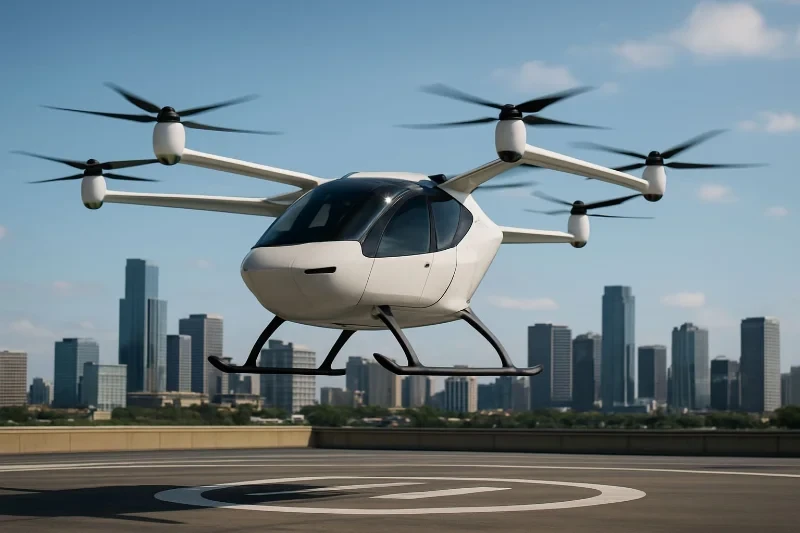
The Federal Aviation Administration (FAA) has greenlit eight pilot programs, paving the way for companies like Archer Aviation, Beta Technologies, Joby Aviation, and Wisk to commence extensive electric aircraft testing this summer. This three-year initiative, spanning 26 states, aims to solidify American leadership in the development of next-generation aircraft for personal transport, regional travel, cargo, and emergency medical services. The program, officially named the Advanced Air Mobility and Electric Vertical Takeoff and Landing Integration Pilot Program, was initially announced last year to accelerate the development of these futuristic vehicles.
The emergence of numerous electric vertical takeoff and landing (eVTOL) companies promises a future of urban air taxis and regional electric flights. However, bringing these aircraft to commercial operation is a complex and costly endeavor, typically involving years of development and hundreds of millions of dollars, alongside the FAA's rigorous multi-year certification process. This new pilot program offers a critical pathway for companies to test their eVTOLs before full regulatory certification is obtained, potentially accelerating their market entry and boosting the stock performance of publicly traded companies like Archer, Beta, and Joby.
Kyle Clark, founder and CEO of Beta Technologies, expressed that selection for this program will enable his company to begin aircraft operations a full year ahead of schedule. This news was met with enthusiasm, as Beta Technologies' stock price saw a nearly 12% increase following the announcement, with Archer and Joby also experiencing stock gains.
Archer Aviation has drawn parallels between this eVTOL initiative and the testing phases of robotaxis, suggesting it will foster public trust and establish essential protocols for the safe scaling of electric air taxis. The company is currently developing the 'Midnight,' a four-passenger piloted eVTOL, and anticipates using this program to prepare for air taxi operations in Los Angeles during the 2028 Olympic Games.
"These partnerships will help us better understand how to safely and efficiently integrate these aircraft into the National Airspace System," stated FAA Deputy Administrator Chris Rocheleau. "The program will provide valuable operational experience that will inform the standards needed to enable safe Advanced Air Mobility operations. We appreciate the strong interest reflected in the many proposals we received."
The FAA confirmed receiving 30 proposals for the program. A key requirement for participation is a partnership between the companies and state, local, tribal, or territorial governments. The pilot programs will explore diverse applications of electric aircraft, from urban air taxis to regional transport. For instance, the Port Authority of New York and New Jersey is collaborating with Archer, Beta, Electra, and Joby on operational concepts, including testing from a Manhattan heliport. In Texas, the Department of Transportation will work with Archer, Beta, Joby, and Wisk to explore regional flights connecting major cities like Dallas, Austin, and San Antonio, aiming to build networks that extend reach across the state.
Some projects boast significant geographic scope. A Utah-led initiative will test advanced aircraft and operational concepts across the Pacific Northwest, Rocky Mountains, and Oklahoma's Plains. Meanwhile, a project spearheaded by the Pennsylvania Department of Transportation involves 13 states working to revitalize regional air travel nationwide. Other focused applications include cargo delivery, medical response, and autonomous operations. Beta and Elroy Air, among others, will test cargo and personnel transport flights to the Gulf of America and to energy industry sites in Louisiana, Texas, and Mississippi. Departments of transportation in Florida, Louisiana, and North Carolina are also leading projects, and the city of Albuquerque is partnering with Reliable Robotics to test autonomous flight capabilities.
Stay Tuned to Devignitor Insights for More Updates