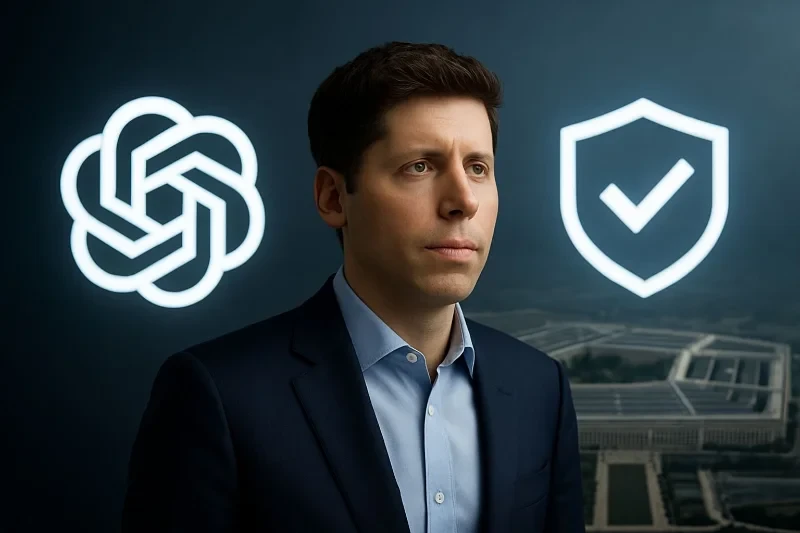
OpenAI Announces Defense Department AI Agreement
OpenAI CEO Sam Altman revealed on Friday that his company has finalized an agreement enabling the Department of Defense to utilize its artificial intelligence models within the department's classified network. This development occurs amidst a notable disagreement between the Pentagon and OpenAI's competitor, Anthropic, concerning the permissible uses of AI technologies.
Anthropic's Stance and Pentagon's Response
The Pentagon had urged AI firms, including Anthropic, to permit their models' use for "all lawful purposes." However, Anthropic sought to establish boundaries, specifically objecting to applications involving mass domestic surveillance and fully autonomous weapons. Anthropic CEO Dario Amodei stated that while the company had not opposed specific military operations or ad hoc limitations, they believed certain AI uses could undermine democratic values. This position was echoed by a significant number of employees from both OpenAI and Google, who signed an open letter supporting Anthropic's stance.
Presidential Involvement and Trade Concerns
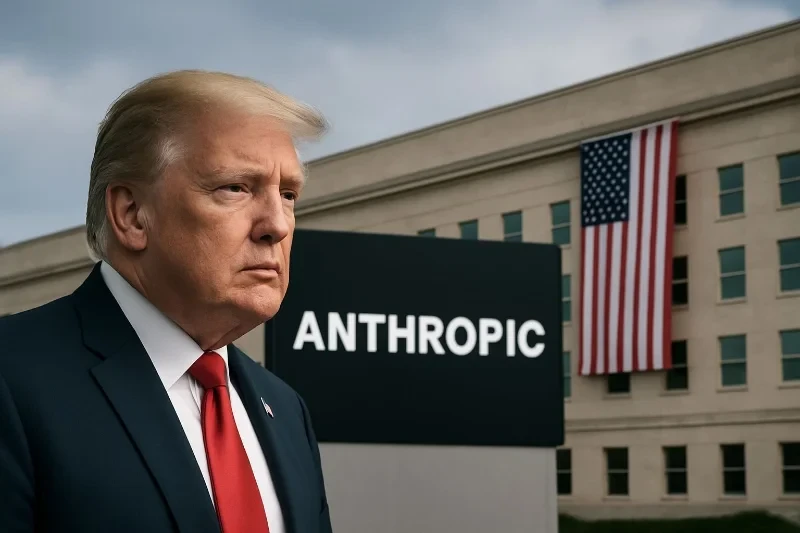
Following the impasse in negotiations between Anthropic and the Pentagon, President Donald Trump publicly criticized Anthropic, referring to its employees as "Leftwing nut jobs." He further directed federal agencies to cease using Anthropic's products after a six-month transition period. In parallel, Secretary of Defense Pete Hegseth asserted that Anthropic was attempting to gain "veto power over the operational decisions of the United States military." Hegseth also declared Anthropic a supply-chain risk, prohibiting any entity doing business with the U.S. military from engaging in commercial activities with the company.
OpenAI's Agreement and Safety Measures
Contrary to the situation with Anthropic, Sam Altman announced that OpenAI's agreement with the Department of Defense incorporates protections addressing the very concerns that troubled Anthropic. Altman clarified on X that OpenAI's core safety principles, which prohibit mass domestic surveillance and mandate human control over the use of force, including autonomous weapon systems, are reflected in the agreement. He stated that the Department of Defense shares these principles and has incorporated them into its policies.
Altman further explained that OpenAI will implement technical safeguards to ensure their models function as intended, a requirement also desired by the Department of Defense. OpenAI plans to deploy engineers to work with the Pentagon to assist with their models and guarantee their safety. Altman expressed OpenAI's hope that the Department of Defense would extend these terms to all AI companies, believing they represent a reasonable and broadly acceptable standard. He emphasized OpenAI's preference for de-escalation and the pursuit of sensible agreements over legal and governmental actions.
According to reports, Altman informed OpenAI employees that the government would permit the company to develop its own "safety stack" to prevent misuse. Under this arrangement, if a model refused a task, the government would not compel OpenAI to override this refusal.
This announcement came shortly after news broke regarding U.S. and Israeli military actions in Iran, with President Trump reportedly calling for the overthrow of the Iranian government.
Stay Tuned to Devignitor Insights for More Updates