Spring AI 2.0 GA adds native Cosmos DB support
You are trying to ship a high-throughput Retrieval-Augmented Generation (RAG) pipeline, but your enterprise stack is locked into Java. Historically, this meant wrestling with fragmented, community-maintained wrappers or spinning up a completely separate database just to handle vector embeddings. We've been watching this ecosystem closely, and the fragmentation problem has finally met its match. Spring AI 2.0 is now Generally Available (GA), graduating into a mature framework. Alongside it comes a suite of native, vendor-maintained Azure Cosmos DB modules designed to bring production-grade AI capabilities straight to the Spring ecosystem.
News Summary
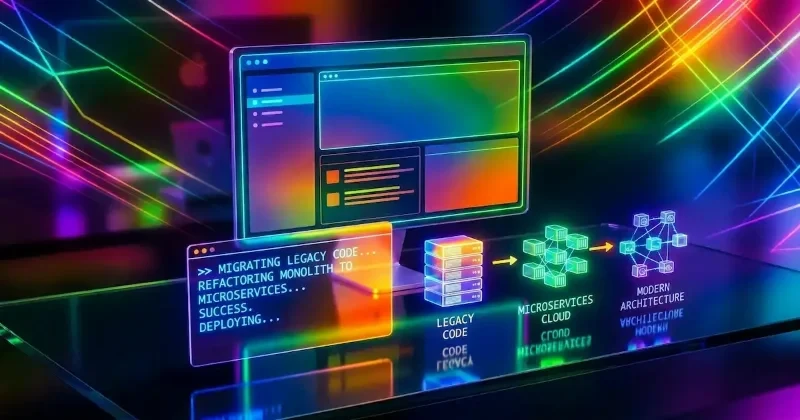
Microsoft and the Spring team have officially launched Spring AI 2.0 GA, establishing a modular architecture built on top of Spring Boot 4.1 and Spring Framework 7. Moving away from the monolithic repository model of its beta days, Spring AI 2.0 shifts vendor-specific integrations into dedicated repositories. For Azure Cosmos DB, this means Microsoft engineers now directly build, maintain, and support these modules, ensuring their release cadence matches the database's core feature updates.
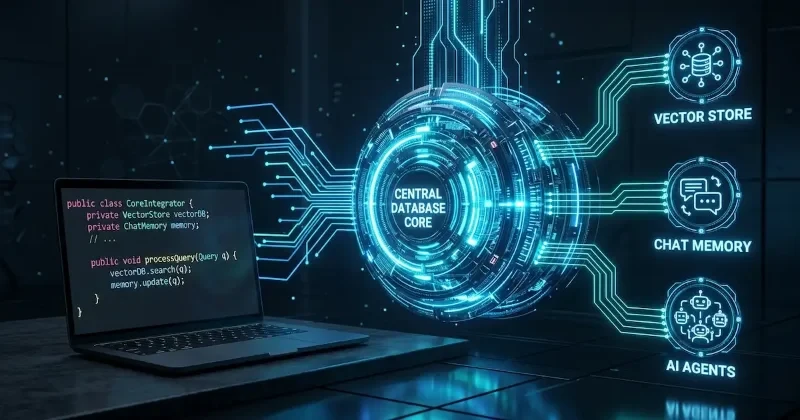
The core release introduces four specific modules under the com.azure.spring.ai group ID. These cover zero-config Spring Boot auto-configuration for vector stores and long-term conversation repositories. The standalone vector store utilizes Microsoft Research’s DiskANN algorithm, an approximate nearest neighbor search index that minimizes latency while maintaining high recall on massive datasets. Crucially, this lets developers store operational application data and high-dimensional vector embeddings within a single database instance.
On the execution side, the framework introduces a stable ChatClient API and native tool-calling loops. The newly shipped CosmosDBChatMemoryRepository implements Spring AI’s standard ChatMemoryRepository interface, enabling persistent conversation history that spans multiple sessions without custom schema definitions. This setup automatically handles container provisioning and partitions chat history dynamically by conversation ID.
The entire architecture requires Java 21+ and Spring Boot 4.1+. To prove the framework's stability, Microsoft refreshed its multi-agent showcase application, replacing previous custom orchestration scaffolding with native @Tool annotations and automated chat memory advisors.
Developer Impact
What this means for developers is simple: you can completely delete your custom data-plumbing code. If you are building LLM backends or multi-agent orchestrations on the JVM, you no longer need secondary vector databases like Pinecone or Milvus alongside your operational data stores.
Authentication issues are also solved out of the box. The integration defaults to keyless authentication via DefaultAzureCredential, allowing your local development environment, staging service principals, and production Azure Managed Identities to resolve roles securely without hardcoded API keys. Furthermore, the inclusion of a flexible vectorIndexType parameter lets you build against the free Azure Cosmos DB Emulator or serverless configurations using standard FLAT indexing, before shifting seamlessly to DISK_ANN in production via a single configuration property update.
Our Analysis
At Devignitor, we view Spring AI 2.0 GA as a massive win for the enterprise developer community. While Python and TypeScript continue to dominate casual AI prototyping, the Java ecosystem runs the backend operations of the global financial, healthcare, and enterprise software sectors. By stabilizing these abstractions, the Spring team has made AI integration an architectural upgrade rather than an experimental risk.
We predict this release will accelerate a consolidation wave in the database market. Developers are growing exhausted from managing distinct database solutions for caching, search, relational data, and vectors. By offering high-performance vector capabilities natively inside an globally distributed NoSQL database, Microsoft is positioning Cosmos DB to capture enterprise RAG workloads that might have otherwise gone to dedicated vector databases.
Compared to older, pre-2.0 iterations where developers had to write custom repositories to manage conversation states across user sessions, the new architecture uses clean, swappable interfaces. If your enterprise decides to migrate a component or swap implementations down the line, your core application code remains untouched. It is a highly opinionated, cleanly decoupled framework that enterprise Java builders have desperately needed.
| Feature | Spring AI Pre-2.0 (Beta) | Spring AI 2.0 GA (Cosmos DB Integration) |
| Module Maintenance | Core Monorepo / Community | Vendor-Maintained (Directly by Microsoft) |
| Vector Search Engine | Basic / External | Native DiskANN, Quantized Flat, and Flat |
| Chat Memory | Custom Scaffolding Required | Native <code>CosmosDBChatMemoryRepository</code> |
| Authentication | Connection Strings / Keys | Default Keyless (<code>DefaultAzureCredential</code>) |
| Minimum Requirements | Legacy Java / Spring Versions | Java 21+ / Spring Boot 4.1+ |
Here is how to wire up the new vector store and handle a similarity search with minimal configuration:
<!-- Step 1: Add the auto-configuration dependency to your pom.xml -->
<dependency>
    <groupId>com.azure.spring.ai</groupId>
    <artifactId>spring-ai-autoconfigure-vector-store-azure-cosmos-db</artifactId>
    <version>1.0.0</version>
</dependency>
// Step 2: Inject and utilize the standard Spring AI VectorStore in your service
import org.springframework.ai.vectorstore.VectorStore;
import org.springframework.ai.vectorstore.SearchRequest;
import org.springframework.ai.document.Document;
import org.springframework.beans.factory.annotation.Autowired;
import org.springframework.stereotype.Service;
import java.util.List;
@Service
public class DocumentIngestionService {
@Autowired
private VectorStore vectorStore;
public void processDocuments() {
// Add raw text documents directly; embeddings are generated automatically
vectorStore.add(List.of(new Document("Devignitor covers enterprise developer infrastructure updates.")));
// Execute a fast similarity search using the underlying DiskANN index
List<Document> results = vectorStore.similaritySearch(
SearchRequest.builder()
.query("enterprise infrastructure")
.topk(3)
.build()
);
// Process results
results.forEach(doc -> System.out.println(doc.getContent()));
}
}FAQs
Q: Do I need a specialized database instance to run vector searches with Spring AI 2.0?
A: No. The new modules plug directly into your standard Azure Cosmos DB NoSQL API account. Both your operational documents and high-dimensional vector embeddings are stored inside the same database container.
Q: Can I test this integration locally without accumulating Azure cloud costs?
A: Yes. By changing your vectorIndexType configuration property to FLAT or QUANTIZED_FLAT, you can run your entire Spring AI 2.0 application against the local Azure Cosmos DB Emulator.
Q: What version of Java is required to use the new Spring AI modules?
A: You must use Java 21 or higher. The architecture depends entirely on modern JVM features alongside Spring Boot 4.1+ and Spring Framework 7 stacks.
Q: How does the chat memory repository prevent database performance degradation over time?
A: It enforces strict data partitioning. The CosmosDBChatMemoryRepository partitions all long-term conversation streams automatically using a /conversationId field, maintaining fast, predictable read/write speeds even as your chat logs scale.
Our Take
Spring AI 2.0 brings the structural predictability that enterprise backends require. By pairing standard engineering interfaces with Azure Cosmos DB's robust, globally distributed database infrastructure, Microsoft has provided Java developers with a production-ready pathway to ship AI apps without architectural compromises. We will continue monitoring the evolution of enterprise data connectors closely as this ecosystem matures.