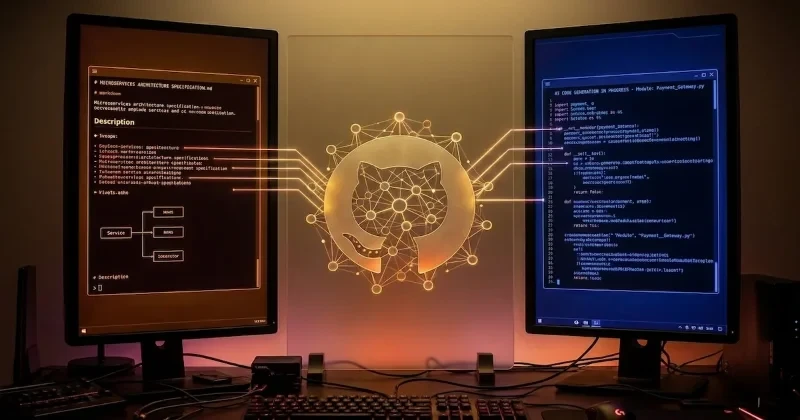
Inside the GitHub Spec Kit Engineering Lifecycle
We've all been there: you feed a series of prompts to an AI coding assistant, get a beautifully rendered block of code, and realize it completely missed the architectural intent. As AI-assisted engineering scales, speed is no longer the bottleneck-alignment is. We've been watching the shift toward AI-native workflows closely. Microsoft's newly highlighted GitHub Spec Kit aims to solve this exact problem by introducing Spec-Driven Development (SDD), shifting the developer workflow from prompt-first chaos to spec-first precision.
Summary
Microsoft has detailed a structured framework called Spec-Driven Development (SDD) alongside GitHub Spec Kit, an open-source toolkit designed to align AI tools with human intent. Released as an open-source project, the toolkit provides a concrete engineering lifecycle to stop translation loss as software moves from requirements to validation.
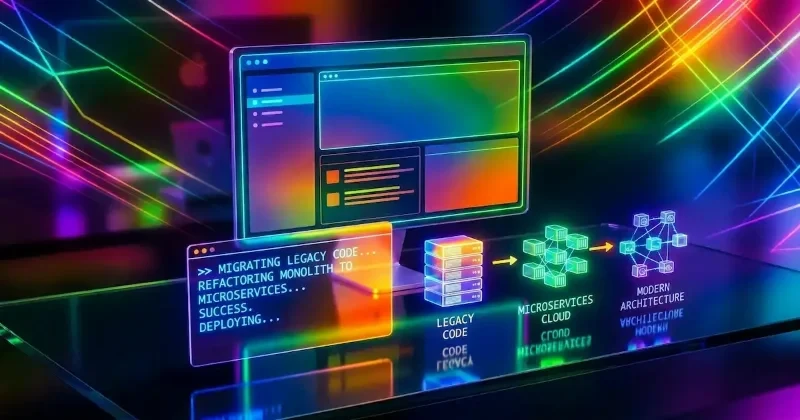
The core issue with current prompt-first workflows is architectural drift. When edge cases and constraints live solely inside ephemeral chat prompts, codebases quickly fracture. SDD fixes this by making a structured specification the shared source of truth for both human engineers and AI agents.
The GitHub Spec Kit lifecycle breaks development down into a continuous, predictable loop:
- Constitution & Specify: Defining high-level dev standards, user needs, and functional requirements up front.
- Clarify & Plan: Resolving architectural ambiguities and selecting frameworks or databases before writing code.
- Tasks & Implement: Breaking technical plans into traceable units for SWEs and AI coding agents to execute in parallel.
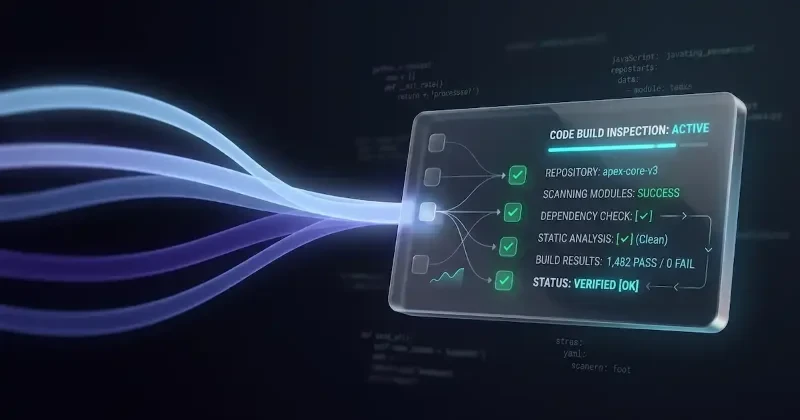
- Analyze & Validate: Reviewing the output directly against the original specification to catch gaps early.
Early case studies demonstrate massive efficiency gains. In one brownfield migration, a team parameterized their reusable onboarding patterns into specs, slashing asset onboarding times from nearly three weeks down to a few days.
Developer Impact
If you are currently shipping a SaaS or building complex multi-service platforms, this framework directly changes how you interface with LLMs. Instead of wasting API tokens and engineering hours rewriting code due to hallucinated assumptions, you feed the structured context directly into tools like GitHub Copilot.
For indie hackers and startup founders, this means fewer downstream rewrites. Your acceptance criteria are explicit from day one, allowing AI agents to generate highly accurate test suites and implementation code simultaneously. It forces you to spend more time planning up front, but it completely eliminates the endless cycle of debugging broken AI outputs later.
Our Analysis
Our stance at Devignitor is clear: GitHub Spec Kit is a massive win for the developer community. The industry has been suffering from "prompt fatigue," where developers act more like exhausted code reviewers than actual architects. By formalizing the specification layer, Microsoft is treating AI agents like junior engineers who need clear, unambiguous documentation rather than magical thinkers who can guess your system architecture.
We predict that over the next year, this spec-first philosophy will become the industry standard across the ecosystem. Competitors like Cursor, Devin, and Anthropic's multi-agent workflows will likely introduce their own open-source specification formats or natively support GitHub's Spec Kit structure to ensure their models don't drift during autonomous execution.
Spec quality directly dictates your output quality. If you don't anchor your context, your codebase will inevitably drift.
| Development Phase | Prompt-First Workflow (Traditional AI) | Spec-Driven Development (GitHub Spec Kit) |
| Requirements | Scored across scattered chats and developer prompts. | Defined up front in a structured PRD/spec file. |
| Architecture | Inferred by the LLM, leading to architectural drift. | explicitly outlined by human architects prior to code generation. |
| Execution | Linear, repetitive prompting that requires constant correction. | Parallel implementation by SWEs and AI agents based on tasks. |
| Validation | Manual code reviews and late-stage downstream testing. | Automated verification tied directly back to original criteria. |
While GitHub Spec Kit utilizes specialized slash commands like /speckit:plan and /speckit:implement inside your terminal or development environment, you can structure your local workspace specifications using a clear markdown matrix that AI agents can easily parse.
# Specification: User Authentication Service
## Core Requirements
- Implement OAuth2 login via GitHub and Google.
- Enforce JSON Web Token (JWT) rotation on the server.

## Architecture & Constraints
- Framework: Next.js 15 (App Router)
- Database: PostgreSQL via Prisma ORM
- Auth Tokens: Store refresh tokens in httpOnly cookies, maxAge 7d.

## Implementation Tasks
- [ ] Initialize `/api/auth/callback` route handlers.
- [ ] Create database schema for user profiles and active sessions.
- [ ] Configure Jest test suites ensuring 100% test coverage on token rotation.
FAQs
Q: What is the main difference between Spec-Driven Development and Test-Driven Development (TDD)?
A: TDD focuses on writing failing tests before writing code to guide the implementation. SDD expands this paradigm by formalizing the entire architectural context, guardrails, and requirements into a living document that guides both test generation and AI code execution seamlessly.
Q: Do I need to adopt the entire GitHub Spec Kit workflow at once?
A: No, Microsoft recommends starting with a small, focused pilot on a single feature or workflow where alignment issues are highly visible. You can gradually formalize and scale the process as your team adapts.
Q: Does GitHub Spec Kit only work with GitHub Copilot?
A: While it is open-source and naturally optimized to work with Microsoft and GitHub's suite of developer tools, the underlying philosophy of structured specs can ground any modern LLM or AI coding assistant.
Q: How does this stop AI codebases from breaking down over time?
A: It eliminates translation loss by acting as a durable source of truth. Instead of letting the AI guess edge cases from a loose prompt, the spec anchors the context so the model never drifts from the original project intent.
Our Take
GitHub Spec Kit is exactly what the AI-native era needs. Moving the focus away from pure code generation speed and putting it back onto precise architectural planning fixes the fundamental flaws of early AI adoption. It proves that the future of engineering isn't about replacing human planning; it's about empowering it. We at Devignitor will continue tracking the evolution of SDD tooling as these frameworks redefine production workflows