Cosmos DB Deep Agents Build Self-Verifying Workflows
We’ve been watching the evolution of AI agents closely, and the shift from simple, single-shot LLM prompts to complex, multi-step orchestration is accelerating. If you are building customer support systems, internal triage workflows, or automation pipelines, a single API call to a model isn't going to cut it anymore. Real-world tasks require systems that can evaluate state, execute tools, log history, and verify their own work. Pairing LangGraph-based frameworks with a highly scalable operational database is becoming the modern blueprint for production-grade AI automation.
News Summary
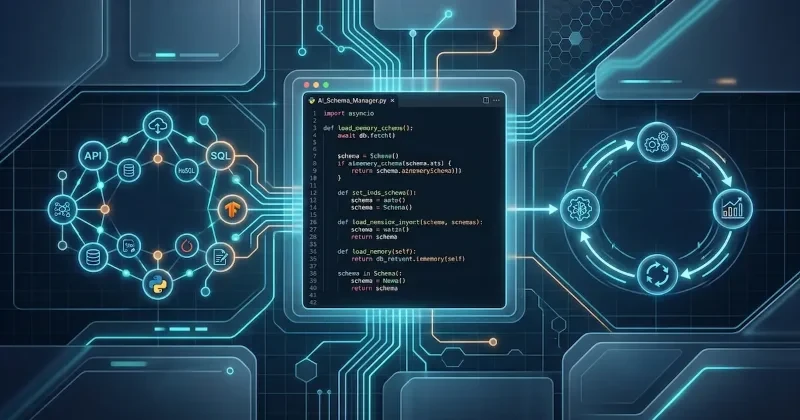
Microsoft has showcased a practical implementation framework using Deep Agents-an agent harness built on top of LangGraph-integrated directly with Azure Cosmos DB. This architecture is designed for autonomous workloads that operate over multiple execution steps rather than relying on a single, massive context window injection. The core engine maintains a dynamic todo list, executes specific database tools, and dynamically loads specialized instructions on demand, avoiding prompt bloat and keeping token costs manageable.
The system relies on a sample application called Support Ops Agent, which directly manages a live customer-support ticket queue. Instead of relying on external vector indexes or sidecars that can easily fall out of sync, the agent reads and writes directly to the live operational database via the standard Azure Cosmos DB SDK. Each ticket is treated as a flexible NoSQL item, allowing the agent to append history logs, add contextual tags, and alter ticket schema dynamically without forcing database migrations.
By leveraging the underlying architecture of Azure Cosmos DB, the agent executes highly optimized point reads when the partition key (/customerId) and unique identifier are known. For broader, queue-wide analytical requests, it performs managed cross-partition queries. This separation ensures that localized mutations remain cheap, consuming minimal Request Units (RUs), while heavier, multi-step diagnostic jobs scale their resource consumption predictably based on the exact scope of data they project.
Developer Impact
What this means for developers is a fundamental shift in how we handle state in agentic workflows. If you are shipping a SaaS or building backend automations, you no longer need to architect complex syncing pipelines between your primary transactional database and an LLM memory layer.
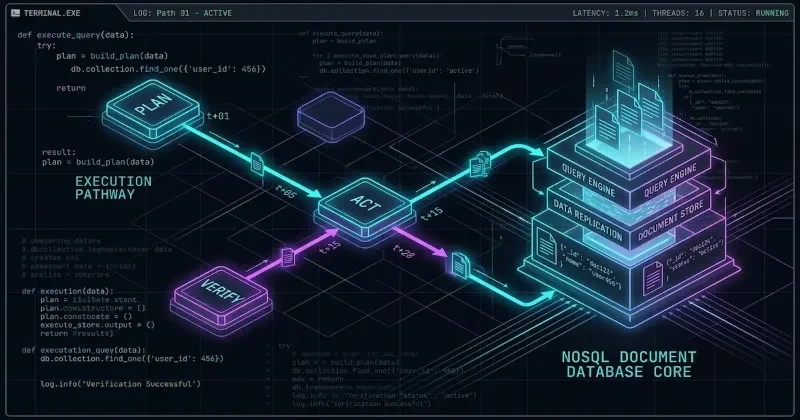
By utilizing transactional operations like partial document patches, your agent can modify state safely and immediately verify the change with a subsequent point read. This architecture mitigates model hallucinations; the agent is strictly prohibited from reporting a successful transaction until it has explicitly read back the updated document from the database and validated the mutation.
Our Analysis
This is an incredibly smart architectural shift for the developer community. Building production-grade agents usually hits a wall when the prompt context fills up with massive payloads or when side-channel vector databases lag behind transactional realities. Pushing the agent's memory and state management directly onto a flexible NoSQL engine like Azure Cosmos DB solves both consistency and token constraints simultaneously.
We predict that the ecosystem will rapidly pivot away from treating databases as passive storage layers. Instead, operational databases will become active state machines for orchestrating systems.
Compared to older patterns that passed massive JSON blocks back and forth through sequential LLM chains, this approach offloads large tool outputs seamlessly. It brings structured predictability to non-deterministic models. If you are building within the Microsoft or LangGraph ecosystem, standardizing on direct database mutations via SDK wrappers is clearly the superior path forward for scale.
| Execution Attribute | Static LLM Chains | Agentic Deep Agents + Cosmos DB |
| State Management | Passed completely inside prompt context | Maintained natively inside NoSQL documents |
| Data Synchronization | High risk of side-index drift | Zero drift; operates directly on live data |
| Token Efficiency | Context window fills rapidly with tool outputs | Tool outputs offloaded; instructions load on-demand |
| Write Verification | Relies on model assumption | Explicit plan-act-verify point read loop |
import os
import json
from datetime import datetime
from azure.cosmos import CosmosClient
from langchain_core.tools import tool

# Initialize the Azure Cosmos DB container client
def _get_container():
    client = CosmosClient(os.environ["COSMOS_ENDPOINT"], os.environ["COSMOS_KEY"])
    database = client.get_database_client("supportdb")
    return database.get_container_client("tickets")

@tool
def update_ticket(ticket_id: str, customer_id: str, fields: dict, history_by: str, history_note: str = None) -> str:
    """Patches an existing ticket item in-place and appends a traceable audit entry."""
    now = datetime.utcnow().isoformat()
    ops = []

    # Map the update fields to Cosmos DB patch operations
    for k, v in fields.items():
        ops.append({"op": "set", "path": f"/{k}", "value": v})

    # Always refresh the timestamp
    ops.append({"op": "set", "path": "/updatedAt", "value": now})

    # Append to the historical array for traceability
    if history_note:
        ops.append({
            "op": "add",
            "path": "/history/-",
            "value": {"at": now, "by": history_by, "note": history_note}
        })

    try:
        # Perform localized atomic patch operation
        _get_container().patch_item(
            item=ticket_id,
            partition_key=customer_id,
            patch_operations=ops
        )
        return f"Successfully patched TICKET-{ticket_id}. Execution loop should now verify state."
    except Exception as e:
        return f"Error executing patch operation: {str(e)}"
FAQs
Q: Why can't the agent use a standard SQL GROUP BY clause across the whole queue?
A: The Azure Cosmos DB Python SDK restricts cross-partition GROUP BY queries, returning an error. To circumvent this, the agent projects a single field across partitions and computes the aggregated value counts directly using internal Python logic.
Q: How does this architecture prevent the LLM context window from overflowing? A: Deep Agents offloads heavy tool outputs dynamically rather than storing entire raw payloads in the immediate prompt context. It also optimizes token usage by loading specific how-to skill instructions only when a task directly calls for them.
Q: What prevents the agent from corrupting data or hallucinating successful writes?
A: The workflow enforces an explicit "plan, act, verify" execution loop. The agent is restricted to structured tool inputs and must perform a subsequent point read to check the fields, status, and history notes before confirming an action to the user.
Q: Is a database migration required if the agent wants to add new tags or fields?
A: No. Because Azure Cosmos DB utilizes a flexible NoSQL JSON schema, the agent can append fields, adjust tags, or scale array sizes on the fly without causing schema conflicts or requiring database downtime.
Our Take
Integrating LangGraph workflows directly with live operational databases represents a massive step toward robust production AI software. By eliminating unnecessary sync layers and anchoring agent memory inside Azure Cosmos DB, developers can deploy fast, cost-efficient, self-verifying systems. We will continue monitoring the evolution of agent frameworks closely as they merge deeper into the transactional data tier.