Microsoft Foundry Adds Claude GA and Autopilot Agents
We’ve been watching the enterprise AI ecosystem closely, and the biggest bottleneck to shipping production-grade agents isn't raw model intelligence-it's non-deterministic behavior and rigid integration pipelines. Microsoft Foundry’s June 2026 rollout directly targets these pain points. Moving past the initial hype of Build 2026, this update delivers practical, builder-first tools designed to make agents predictable, measurable, and deeply integrated into existing workspace infrastructure. If you've been hesitant to deploy autonomous workflows due to compliance or token bloat, the landscape just changed significantly.
News Summary
Microsoft Foundry's June 2026 digest highlights a massive wave of feature rollouts, production-ready state transitions, and SDK alignments. Headlining the update is the General Availability (GA) of Anthropic’s Claude models hosted directly on Azure infrastructure. Brought to life via a strategic partnership alongside NVIDIA and Anthropic, these models run on high-performance NVIDIA Blackwell Ultra systems. Developers can access Claude via the standard Messages API, complete with native support for prompt caching, extended thinking protocols, tool streaming, and Entra ID authentication.
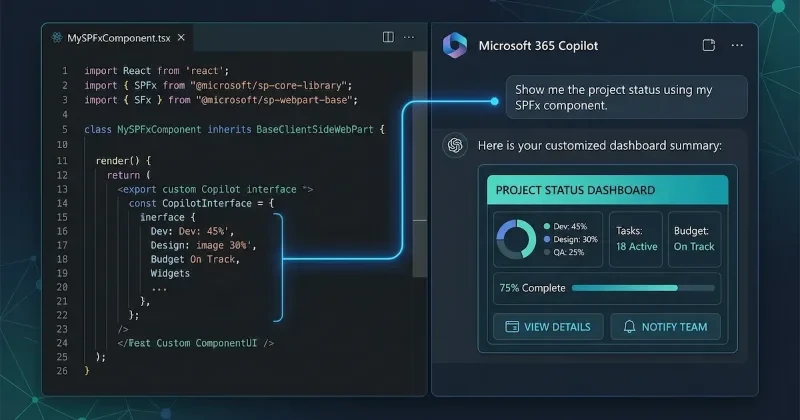
On the orchestrator layer, Foundry Agent Service has officially brought its Microsoft 365 Copilot and Teams publishing pipeline to GA. This allows teams to ship agents into enterprise surfaces without writing separate integration code. Alongside this, Microsoft introduced a public preview of "Autopilot Agents." These aren't standard loop chatbots; they operate with dedicated Entra Agent IDs, full productivity licenses, individual emails, calendars, and active Teams presences, allowing them to collaborate asynchronously inside shared group channels.
The layer where agents discover and leverage capabilities, known as Toolboxes, received major preview enhancements. Most notably, Tool Search replaces flat tool schemas by introducing meta-tools (tool_search and call_tool) to dynamically fetch relevant functions at runtime, curbing context window crowding and token bleed. Additionally, the new Routines engine provides native event-driven and scheduled run controls, eliminating the need for developers to manage external CRON infrastructure for agent execution.
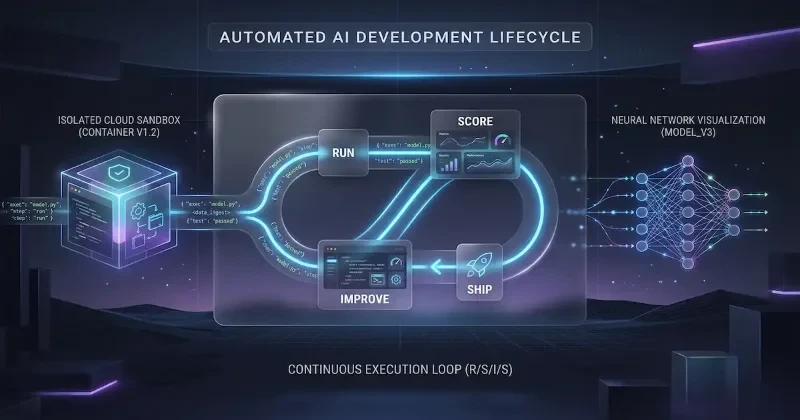
Finally, the release introduces Agent Optimizer into private preview, automating the standard manual process of prompt rewriting and model evaluation into a closed-loop system. Memory components also matured with procedural memory capabilities to help agents stick to enterprise workflows consistently, while the Voice Live API preview added a structured azure-realtime-native voice type and dual-channel, client-side echo cancellation reference handling.
Developers
For developers actively building AI applications, these updates remove massive integration overhead. If you're building SaaS products or internal enterprise tools, the GA of Claude on Azure means you can migrate standalone Anthropic API workloads onto your existing Azure bill, utilizing consolidated Claude Consumption Units (CCU) while preserving zero data retention guarantees.
If you are managing complex agents utilizing hundreds of functions, turning on the new Tool Search parameter stops your context windows from being choked by unused JSON schemas. For those building workflow automation, the introduction of Routines means you no longer need to spin up separate serverless functions or event brokers just to trigger an agent run; the platform handles scheduling, queuing, and execution natively.
Our Analysis
Our take on the June update is highly positive: this is exactly what the developer community needs to transition from brittle proof-of-concepts to resilient, deterministic software architecture. Microsoft's choice to back the OpenEnv reinforcement learning standard alongside Hugging Face proves they are thinking about long-term developer velocity rather than short-term ecosystem lock-in.
We predict that the traditional approach of manually tweaking system prompts when an agent breaks is effectively dead. Closed-loop, non-parametric optimization frameworks like Foundry's Agent Optimizer will soon become the standard production workflow for any team serious about maintaining reliable AI performance metrics.
By embedding Autopilot agents directly into the corporate directory via Entra ID, Microsoft has established a distinct advantage over independent framework competitors. While tools like LangGraph or CrewAI provide excellent local orchestration logic, they lack native, governed distribution hooks into enterprise authentication layers.
Foundry bridges that gap seamlessly. The addition of Claude as a peer reasoning core alongside Microsoft's native models ensures that developers aren't forced into an all-or-nothing stack selection, turning Azure into a highly versatile runtime environment for multi-agent architecture.
| Feature / Capability | Previous State (Build 2026 Era) | New State (June 2026 Update) |
| Claude Availability | Preview / External API | General Availability (GA) on Azure |
| M365 & Teams Pipeline | Multi-surface rebuilds required | Governed single-pipeline publishing (GA) |
| Agent Identity | Shared bot / Session-bound | Dedicated Entra Agent ID (Public Preview) |
| Tool Management | Flat list schema parsing | Dynamic Tool Search routing (Preview) |
| Agent Improvement | Manual system prompt adjustments | Automated, closed-loop Agent Optimizer |
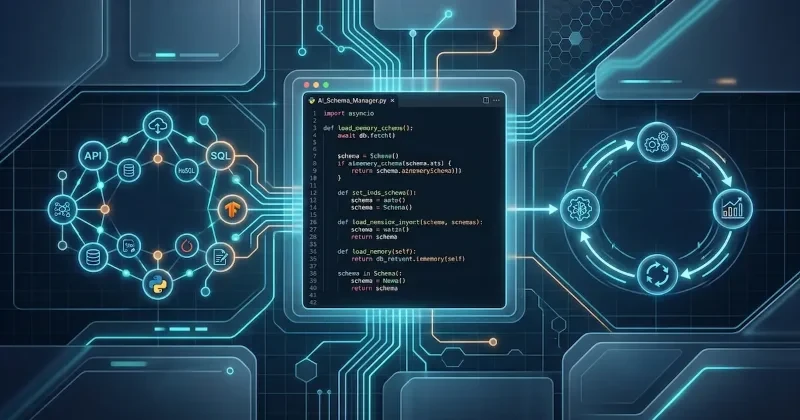
The following Python example shows how to configure a new memory store utilizing the latest procedural memory structures and retention configurations from the updated SDK.
from azure.identity import DefaultAzureCredential
from azure.ai.projects import AIProjectClient
from azure.ai.projects.models import MemoryStoreDefaultDefinition, MemoryStoreDefaultOptions

# Initialize the project client targeting your Foundry endpoint
endpoint = "https://your-resource.services.ai.azure.com/api/projects/your-project"

with DefaultAzureCredential() as credential:
    with AIProjectClient(endpoint=endpoint, credential=credential, allow_preview=True) as project_client:

        # Configure options ensuring procedural memory is enabled alongside retention policies
        memory_options = MemoryStoreDefaultOptions(
            user_profile_enabled=True,
            chat_summary_enabled=True,
            procedural_memory_enabled=True, # Forces agent to consistently follow standard operating procedures
            default_ttl_seconds=2592000     # Configures a strict 30-day memory retention window (in seconds)
        )

        definition = MemoryStoreDefaultDefinition(
            chat_model="gpt-5-mini",
            embedding_model="text-embedding-3-large",
            options=memory_options
        )

        # Deploy the production-ready memory store
        memory_store = project_client.beta.memory_stores.create(
            name="production_support_memory",
            description="Enterprise support memory with active procedural recall and TTL policies.",
            definition=definition,
        )

        print(f"Successfully deployed memory store: {memory_store.name}")
FAQs
Q: How does the new Tool Search feature save token costs?
A: Instead of appending every single tool and function definition JSON schema to the prompt context window on every message turn, the agent runs a localized meta-tool query. It describes its intent, discovers only the specific tools required for that action, and executes them dynamically.
Q: What makes an Autopilot Agent different from a standard Teams chatbot integration?
A: Standard chatbots operate inside rigid prompt-and-response windows. Autopilot Agents possess their own Entra Agent ID, access permissions, email addresses, and calendars, allowing them to persistently live in group spaces, track conversation flows, and independently manage long-term objectives.
Q: Can I run the new optimization loop locally on my development machine?
A: No. The optimization loop requires scaffolding via azd project templates and runs completely async on cloud compute infrastructure to handle high-throughput parallel evaluations across your test datasets.
Q: How do the Python and JavaScript/TypeScript SDKs differ in this June update cycle?
A: Both are converging toward a stable 2.3.0 release that promotes Hosted Agents out of beta. However, the JS/TS prerelease uniquely features experimental OpenTelemetry semantic-convention tracing for token metrics, while Python introduces structured timedelta conversions for TTL handling.
Our Take
Microsoft Foundry's evolution in June 2026 signals a definitive shift toward structured, maintainable AI application engineering. By treating agent deployment, discovery optimization, and enterprise governance as core infrastructure primitives rather than experimental abstractions, Microsoft has handed developers a highly dependable blueprint for deployment. We are excited to see how these newly stabilized runtime APIs reshape production architectures over the coming months.