Beyond Installs: How Paid Ads & Organic Growth Shape Your Game's Destiny on Google Play
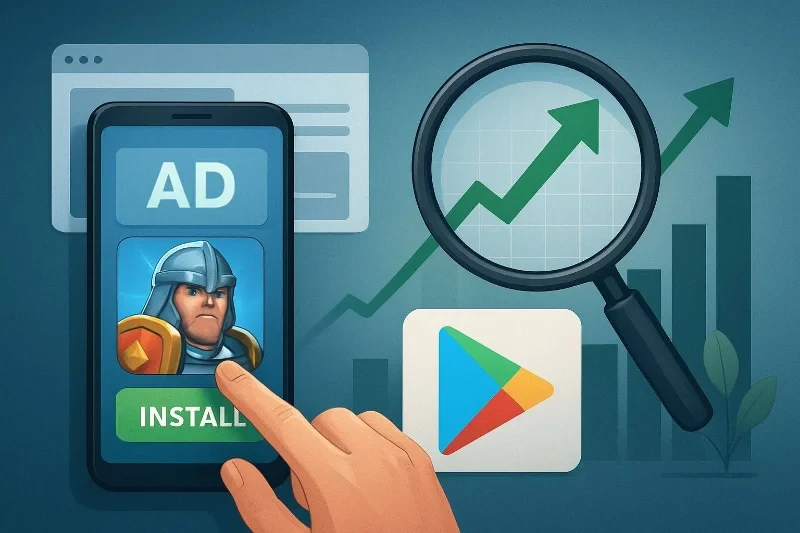
In the hyper-competitive world of mobile gaming on Google Play, raw installs are just the starting line. Paid ads and organic growth work together to drive post-install success, with paid users often showing different engagement patterns while fueling organic signals like reviews and rankings for a powerful flywheel effect.
Understanding Traffic Sources on Google Play
Google Play categorizes traffic into Search, Explore, and Referral, providing clearer attribution since November 2022 updates separated paid from organic installs. Previously, paid ads muddled organic metrics, but now Search traffic excludes in-store ads, focusing purely on organic queries, while Explore traffic covers non-search discoveries like featured sections also purified of paid influence.
Referral traffic captures third-party sources, including most paid campaigns, making it easier to track how external ads contribute without inflating organic stats. For games, this distinction is crucial: organic search users arrive via relevant keywords, indicating high intent, whereas paid referrals might prioritize volume over precision.
Organic traffic demands App Store Optimization (ASO) optimizing titles, descriptions, icons, and screenshots for better visibility and conversion rates. Benchmarks in Google Play Console's "Grow > Users > Store Performance" reveal how your game's listing converts impressions to installs, a key metric before scaling paid efforts.
Paid vs. Organic Users: Post-Install Realities
Users from paid sources and organic channels behave differently post-install, impacting key performance indicators (KPIs) like retention, session length, and monetization. Industry data shows organic installs often lead in engagement for certain verticals; for Android entertainment apps (including games), organic accounts for 69% of installs, outpacing paid.
Organic users tend to be more loyal and brand-aligned, as they discover games through intent-driven searches, leading to higher lifetime value without acquisition costs. In contrast, paid users from Google Ads or referrals may exhibit lower initial engagement but provide immediate scale. Adjust's analysis confirms a near 50/50 split across apps, varying by vertical games lean organic-heavy when ASO shines.
For games specifically, organic growth fosters long-term visibility: high rankings from sustained installs teach keyword insights, enabling keyword mastery and user sharing on social networks. Paid users, however, can underperform in reviews or daily active users (DAU) if creatives don't match core gameplay, highlighting the need for targeted campaigns.
| Metric | Organic Users | Paid Users |
|---|---|---|
| Acquisition Cost | Free (ASO-driven) | Direct CPI payment |
| Engagement Quality | Higher intent, better retention | Scalable but variable LTV |
| Speed | Slow build-up | Immediate volume |
| Vertical Example (Android Entertainment) | 69% share | 31% share, boosts signals |
This table underscores why installs alone mislead focus on post-install KPIs like 7-day retention and in-app purchases to gauge true destiny.
The Flywheel Effect: Paid Ads Boosting Organic Signals
Paid campaigns aren't just for volume; they ignite organic growth through algorithmic boosts on Google Play. Algorithms factor in downloads, impressions, and click-through rates (CTR), so surging paid installs signal popularity, elevating rankings.
Real-world examples abound: one campaign spiked daily installs in target countries, directly correlating with organic search uplift in App Store Connect analogs (applicable to Play Console). Increasing install volume is key paid floods the funnel, improving ASO metrics like visits and conversions, which in turn lowers future CPI.
- Optimize ASO first: Nail screenshots and previews to convert paid traffic efficiently, reducing waste and amplifying organic lift.
- Target high-intent keywords: Use paid search ads on game-specific terms to mimic organic discovery, building reviews and engagement signals.
- Build backlinks: External links to your Play page enhance rankings, turning paid momentum into sustained organic traffic.
- Monitor benchmarks: Compare your game's conversion rates against peers in Play Console to iterate creatives.
RevenueCat data proves paid drives organic uplift across channels, with ASO and UA teams collaborating for synergy. For games, this means paid UA (user acquisition) populates leaderboards and social shares, generating user-generated buzz.
Strategies for Games: Balancing Paid and Organic Mastery
To shape your game's destiny, integrate paid and organic into a cohesive flywheel. Start with ASO fundamentals: Craft compelling descriptions, foster reviews via in-game prompts, and A/B test visuals core influencers of organic traffic.
Layer in paid:
- Pre-launch paid bursts: Generate early installs to kickstart rankings without organic history.
- Review farming: Target engaged paid users likely to rate positively, boosting credibility.
- Cross-promotion: Use referrals for viral loops, blending paid scale with organic sharing.
- Vertical benchmarking: Games in entertainment thrive on 69% organic; aim to push this via paid signals.
Tools like Ahrefs reveal competitor backlinks, while Play Console tracks traffic purity post-2022. Avoid siloed teams ASO and paid UA interconnect like vessels, where one elevates the other.
Case in point: Apps seeing paid-driven install spikes report organic growth persisting weeks post-campaign, unlike pure paid decay. For games, this translates to sustained DAU, higher ad revenue, and IAP spikes from loyal organic cohorts.
Challenges and Pitfalls to Avoid
Not all paid traffic boosts organic equally. Poor creatives lead to low conversions, dragging rankings. Gray areas persist in attribution pre-2022 data lumped ads into search, skewing insights. Games must also navigate vertical disparities: finance apps hit 63% organic on Android, but casual games demand aggressive paid to compete.
Over-reliance on paid risks burnout; organic builds brand trust for free, with 84% of traffic organic store-wide per some stats. Balance is key neither extreme sustains long-term dominance.
Unlocking the Flywheel for Your Game
Paid ads provide rocket fuel; organic growth ensures the engine runs forever.
By using paid to amplify signals reviews, engagement, installs you create a self-reinforcing loop on Google Play. Top games master this: scale paid thoughtfully, optimize relentlessly, and watch post-install KPIs soar. Utilizing the expertise of Devignitor can further refine these growth strategies.
Prioritize hybrid strategies: ASO for foundation, paid for acceleration. Track in Play Console, iterate on data, and build that flywheel. Your game's destiny? Not just installs, but enduring dominance.